High-Performance Homes Built for Nova Scotia


Floor System
An insulated slab foundation serves as the base for a comfortable living space
All Sprouts are built on insulated slab foundations with integrated frost protection, using high-performance formwork. This advanced insulating system, designed specifically for the Canadian climate, is both economical and quick to install, outperforming conventional frost wall or slab methods. It eliminates thermal bridging between the slab and the ground, providing continuous insulation. Our approach boasts an R30 floor insulation value, exceeding Building Code standards by 300%, leading to a structure that's more energy-efficient and comfortable under foot.


Wall & Roof System
Eliminating thermal bridging and maintaining a tight building envelope
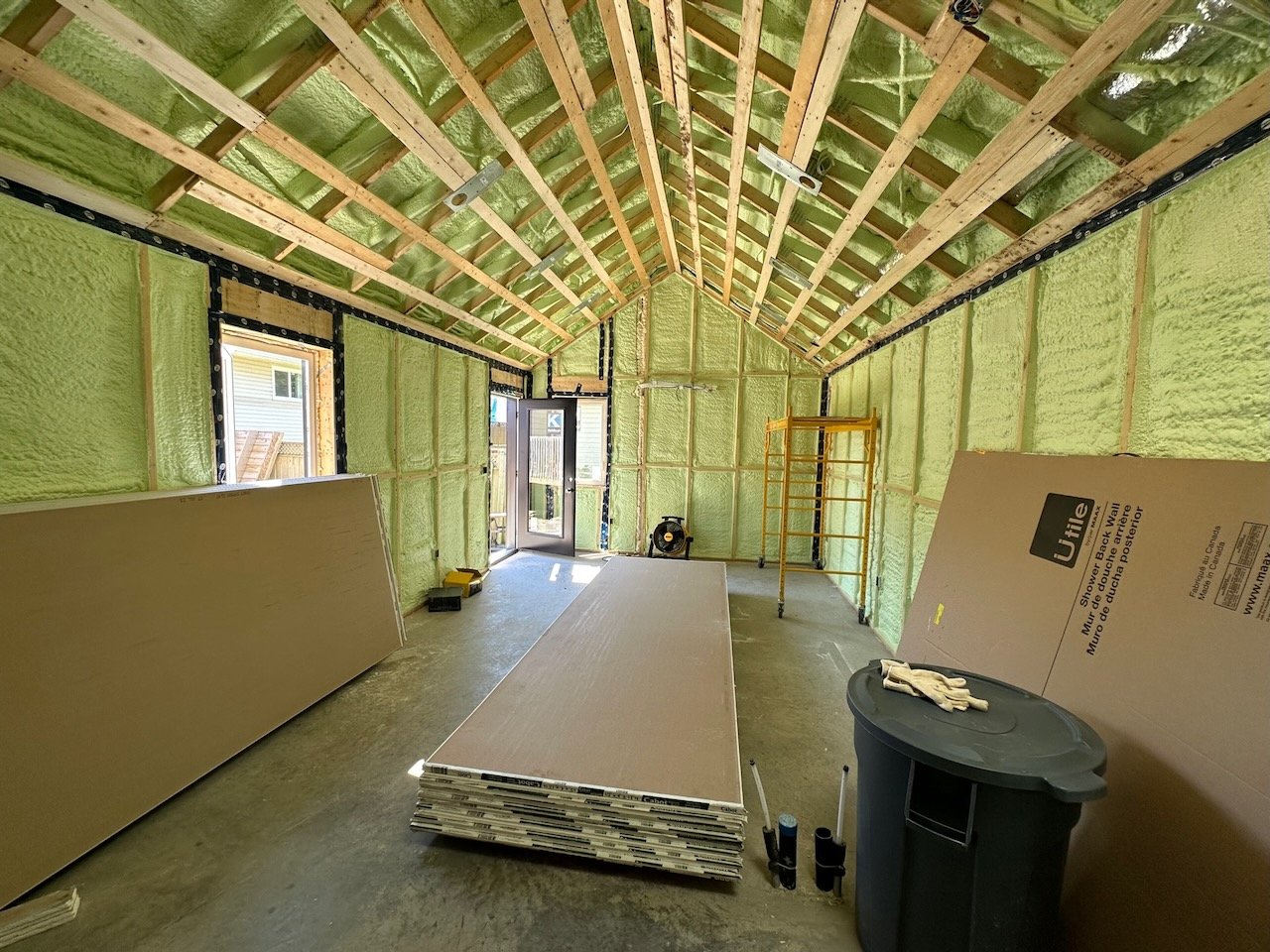
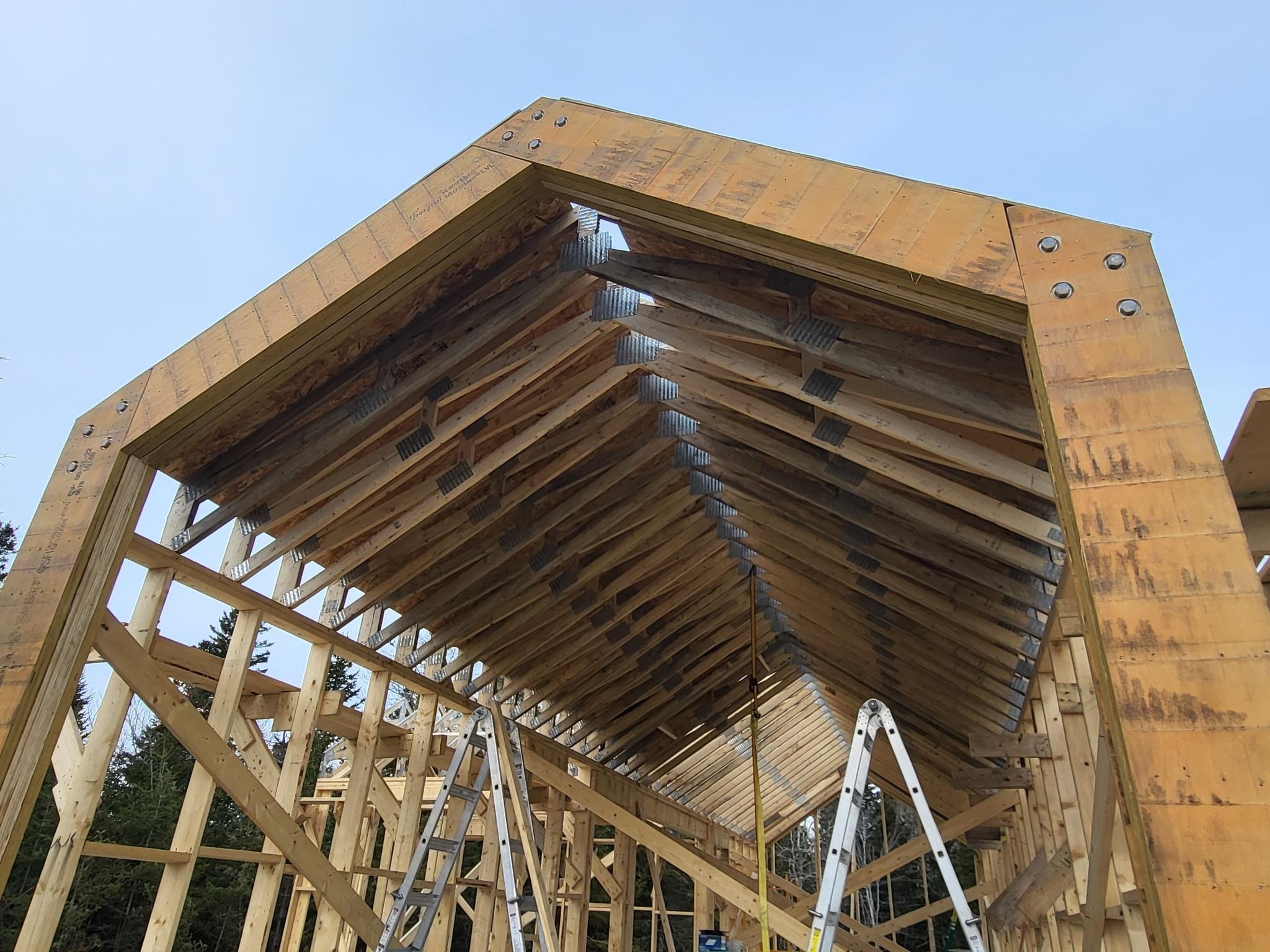
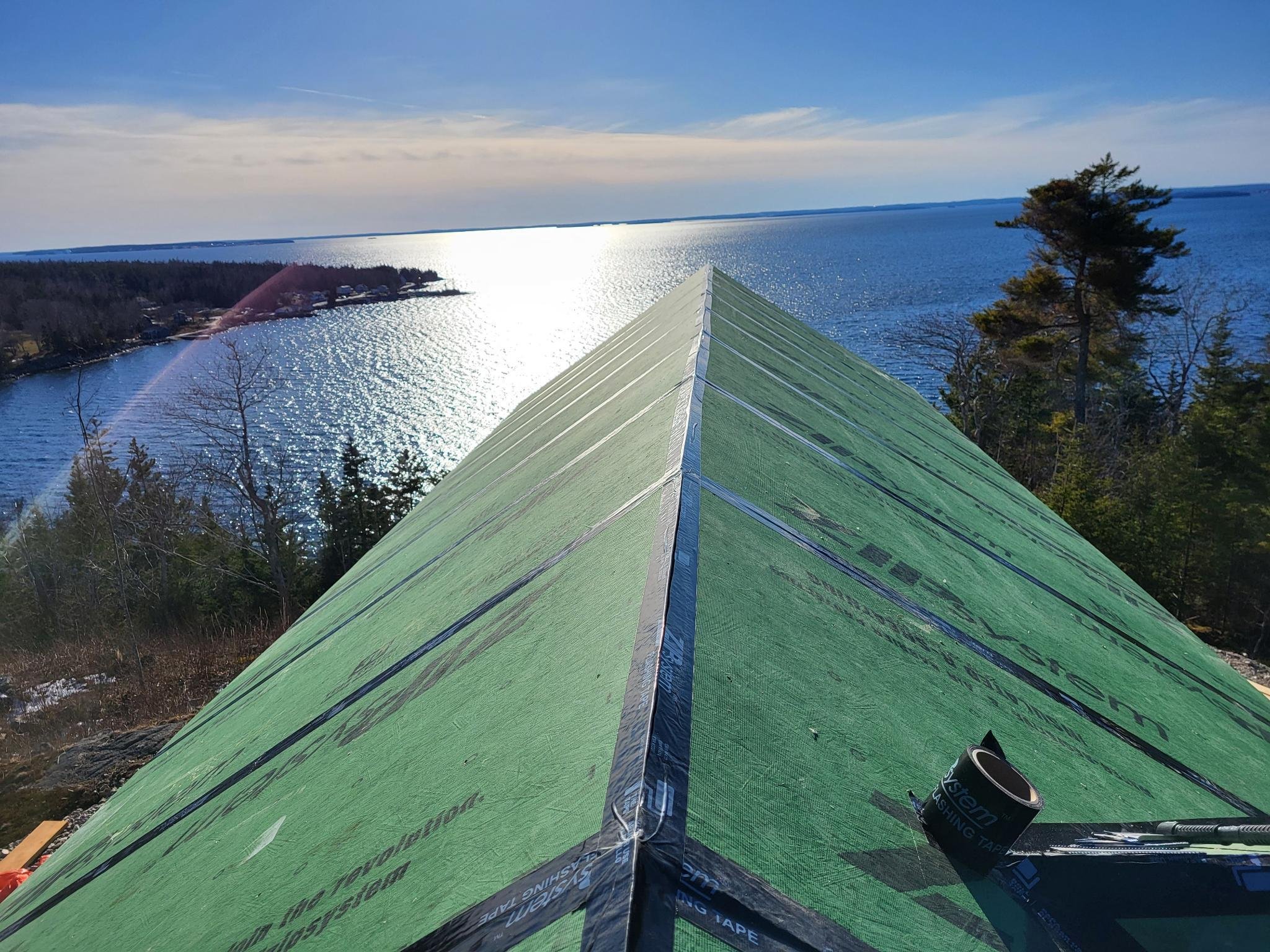
Our construction includes 14" roof trusses and 2x6 wall structures, complemented by external insulation, creating an uninterrupted thermal barrier. The interior spray foam insulation surpasses code standards, effectively lowering heating and cooling expenses. These layers provide a total insulation value of R30 for walls and R40 for the roof. We employ Canadian-manufactured 24 gauge standing seam metal cladding from Agway Metals.

Compared to a typical new house,
a Two Bedroom Sprout uses
28.4%
less energy
Performance Results
Energy Usage
An EnerGuide test of a Two Bedroom Sprout, in its largest footprint configuration, demonstrates clear efficiency benefits. We will convert all energy to Gigajoules (GJ). For perspective, one GJ is the amount of energy that would be consumed by a 100-Watt light bulb lit continuously for four months.
By EnerGuide Standards, a typical new home will require 67 GJ/year, however the Sprout requires only 48 GJ/year.

The test also shows that heating & cooling accounts for only 18% of the annual energy consumption of the Sprout. This is thanks to the techniques outlined, especially as they all work together to provide a high level of energy performance.
The EnerGuide assessment uses metrics from testing for air tightness, insulation values, heat and heat recovery systems, as well as how these components come together to provide the best results.

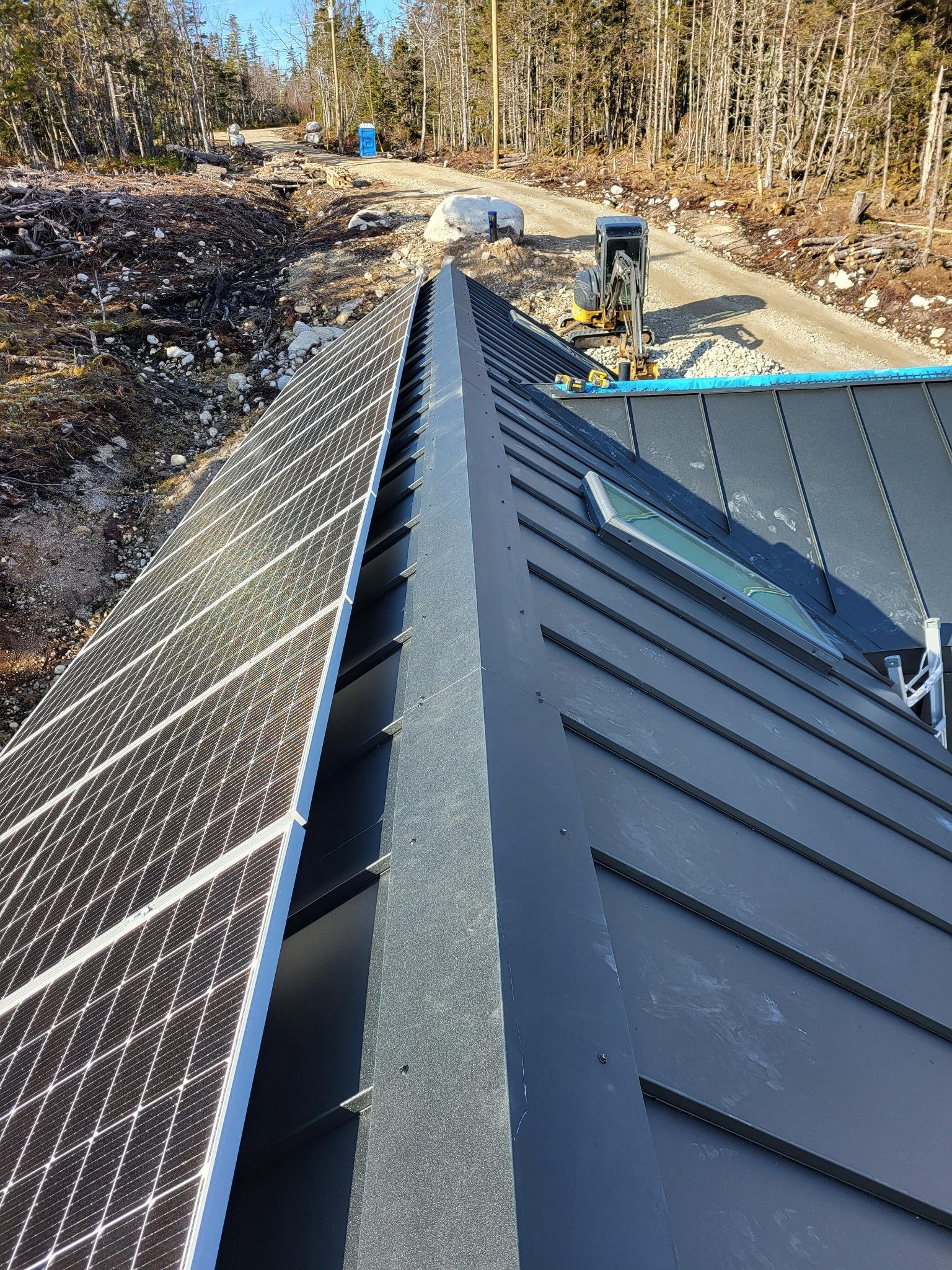
Over 50% of the Sprout’s energy needs can be provided by clean solar energy
Our test of a Two Bedroom Sprout with a solar array (6.37 kW solar photovoltaic system) demonstrates that it is able to offset its 48 GJ/year energy deficit with 7319 kWh of clean solar energy, equivalent to 26 GJ/year*.
By offering the ability to include solar offsets, our clients are able to see returns on their cost to acquire energy over the long term. They also help the environment, knowing that the energy from solar production that powers their Sprout is not contributing to carbon dioxide emissions.
* Results will vary based on several factors such as system size, orientation and tree coverage.